

Ebola Surges in DRC with 750 Suspected Cases丨XABT Integrated Solution Supports Epidemic Prevention & Control

https://www.bbc.com/news/articles/cr7p30m1dn1o
The WHO has upgraded the public health risk of the ongoing Bundibugyo Ebola outbreak in the Democratic Republic of the Congo from high to very high, while rating regional Africa risk as high and global risk as low.
The rare Bundibugyo strain has no approved vaccine and kills around one-third of infected people. So far, the outbreak has reached nearly 750 suspected cases and 177 suspected deaths.
Oxford University scientists are developing a new Ebola vaccine using similar technology to the AstraZeneca COVID vaccine. Animal trials are already underway, with clinical trials expected in 2–3 months. The Serum Institute of India is set to mass-produce the vaccine once medical-grade materials are available. Another experimental Bundibugyo vaccine is also in the pipeline, but testing doses will take 6–9 months to prepare.
Ebola virus disease is an acute infectious disease caused by viruses of the Orthebolavirus genus, which can infect humans as well as non-human primates including monkeys, gorillas and chimpanzees.
There are six known species of Ebola virus: Zaire, Sudan, Bundibugyo, Taï Forest, Reston and Bombali. Each strain differs greatly in pathogenicity and transmission risk.
Among them, the Zaire, Sudan and Bundibugyo strains are the most hazardous, having triggered multiple large-scale global outbreaks in history. The currently circulating strain in the DRC and Uganda is the Bundibugyo Ebola virus.
The general population is universally susceptible to Ebola virus. Main transmission routes include:
· Direct contact with infected wild animals such as bats and non-human primates
· Exposure to blood, bodily secretions and excreta of confirmed patients
· Contact with virus-contaminated articles and environments
At present, there is no universal specific therapeutic drug for Ebola. Licensed vaccines are only available for the Zaire strain, while no approved vaccine is yet available for the circulating Bundibugyo strain. Therefore, strict daily personal protection is essential.
1. Avoid traveling to high-risk epidemic areas.
2. Refrain from contact with wild animals, suspected patients, and contaminated articles and environments.
3. Minimize visits to crowded public places; if necessary, avoid direct physical contact with others.
4. Maintain good living habits and strengthen hand hygiene regularly.
Scientific understanding of infectious diseases and strict self-protection are the best line of defense against infection.
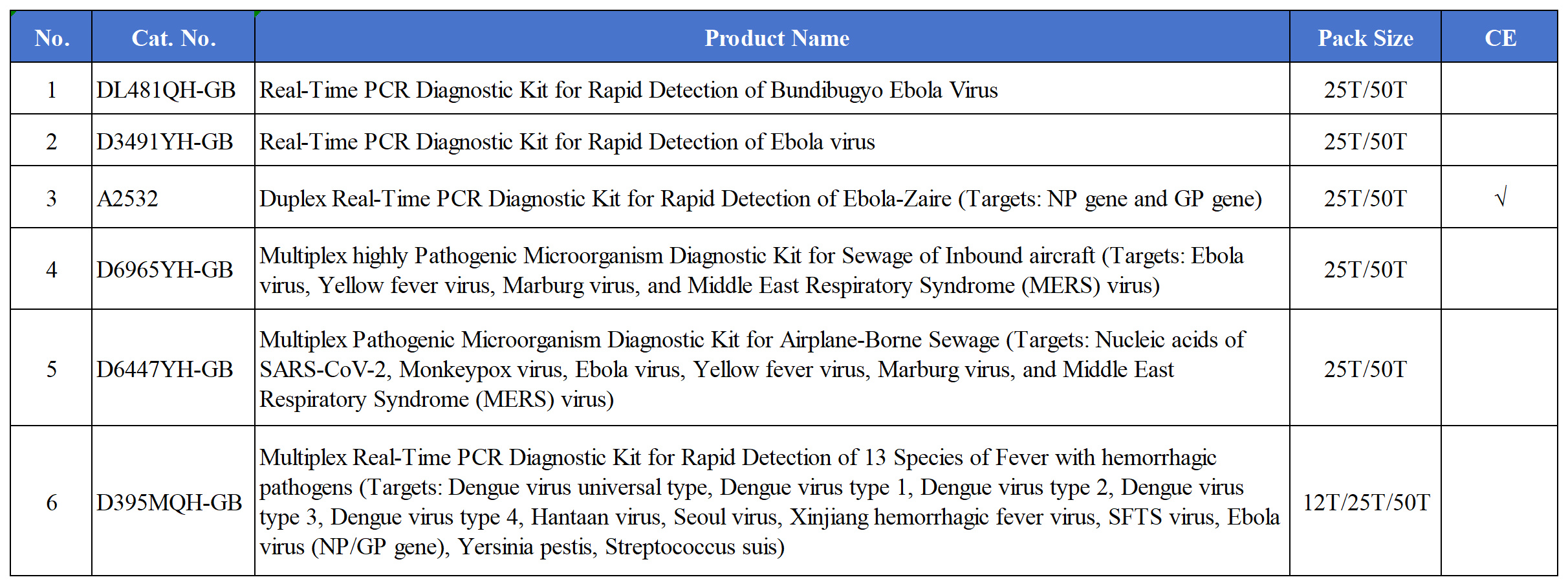
Our full-process solution for pathogenic microbial monitoring adopts multi-target pathogen nucleic acid detection kits, enabling accurate and rapid detection of pathogenic nucleic acids. It supports efficient infectious disease screening and pathogen identification, providing reliable technical support for disease surveillance, risk assessment and emergency response at CDCs, port inspection and quarantine institutions, and other medical and public health organizations.

Customer service consultation:+ 86-10-8193-7740
Contact Email:christian@x-abt.com
working hours:9:00-17:30

FOCUS ON US